Jeff Whitten, correspondent
State lawmakers representing Bryan County want the county’s voters to decide whether the floating homestead tax exemption known as HB581 will also apply to the school board.
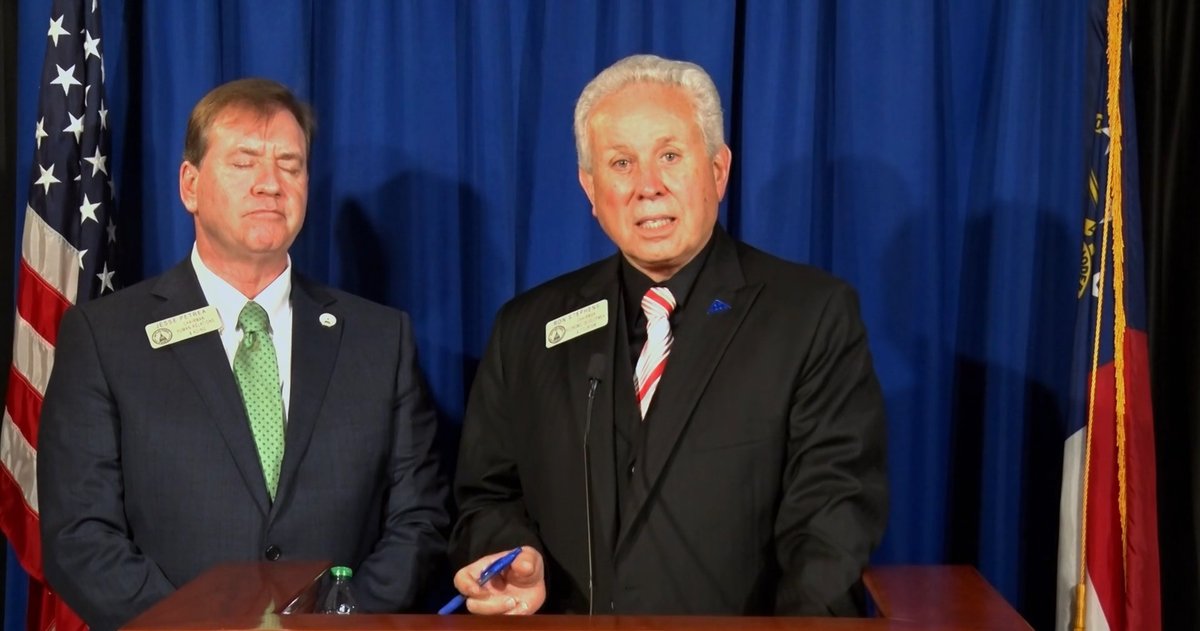
Under HB476, filed Feb. 18, representatives Ron Stephens, Jesse Petrea and Lehman Franklin are calling for a referendum on the exemption to be on the ballot in Bryan County in November.
If the bill, also known as the Watson-Stephens-Petrea- Franklin Tax Relief Act and adding Sen. Ben Watson to the legislation, makes it through the General Assembly and is approved by local voters in November, a homestead exemption limiting assessment increases to the Consumer Price Index, or inflation rate, will also apply to the Bryan County Board of Education beginning in 2026.
That’s what 66 percent of the county’s voters asked for in a 2024 statewide referendum on HB581, but unlike the Bryan County Commission and cities of Pembroke and Richmond Hill, which opted in to the provisions in the bill, the BOE opted out, claiming the exemption for homeowners will hurt the fast-growing district’s ability to provide a quality education.
School officials, who did not respond to an email to the superintendent’s office, said earlier the school board could be forced to raise the millage rate in order to keep up with growth. School system enrollment in the state’s fastest growing county has climbed from 8,527 students in 2015 to 10,556 in 2024, while the district’s budget has gone from $52.3 million as recently as 2013 to crossing the $100 million for the first time in 2022. It is $132.8 million in 2025, according to the Bryan County Schools website.
But property values are also rising fast in Bryan County, where the U.S. Census Bureau said the median value of a home has gone from $317,000 in 2023 to $393,545 in 2025, according to Zillow. The median listing price for a home in Bryan County is now $467,000, according to online real estate websites.
As home values have climbed, so have assessments, which in turn has sometimes “exponentially” increased property taxes, officials say, while also allowing local government officials either to adopt a rollback rate or keep millage rates steady and claim they haven’t raised taxes. In the last several years only the Bryan County Commission has lowered its millage rate.
In announcing the new legislation, Stephens said that while members of the local delegation have supported teachers and the school board through a number of measures, from fully funding the schools by various sales taxes to approving and paying for teacher pay raises, it is important to give homeowners “predictability” when it comes to property taxes.
Petrea was more blunt, noting Georgia’s teachers are the highest paid in the Southeast and more than half the state’s budget is spent on education while two-thirds of local taxes go to the school system.
“This (legislation) gives the people what they asked for,” he said. “In November people had the opportunity to vote on the ballot on HB581 to provide the people in Bryan County who are homeowners tax relief. They voted with a super majority of 66 percent to support that effort.”
He called that result “numbers even a kindergartner couldn’t miss,” but “it appears some have missed it.”
“What we’re going to do,” Petrea continued, “is let the people make the decision on whether or not they choose tax relief.”
Jeff Whitten is a freelance correspondent with the Bryan County News.